
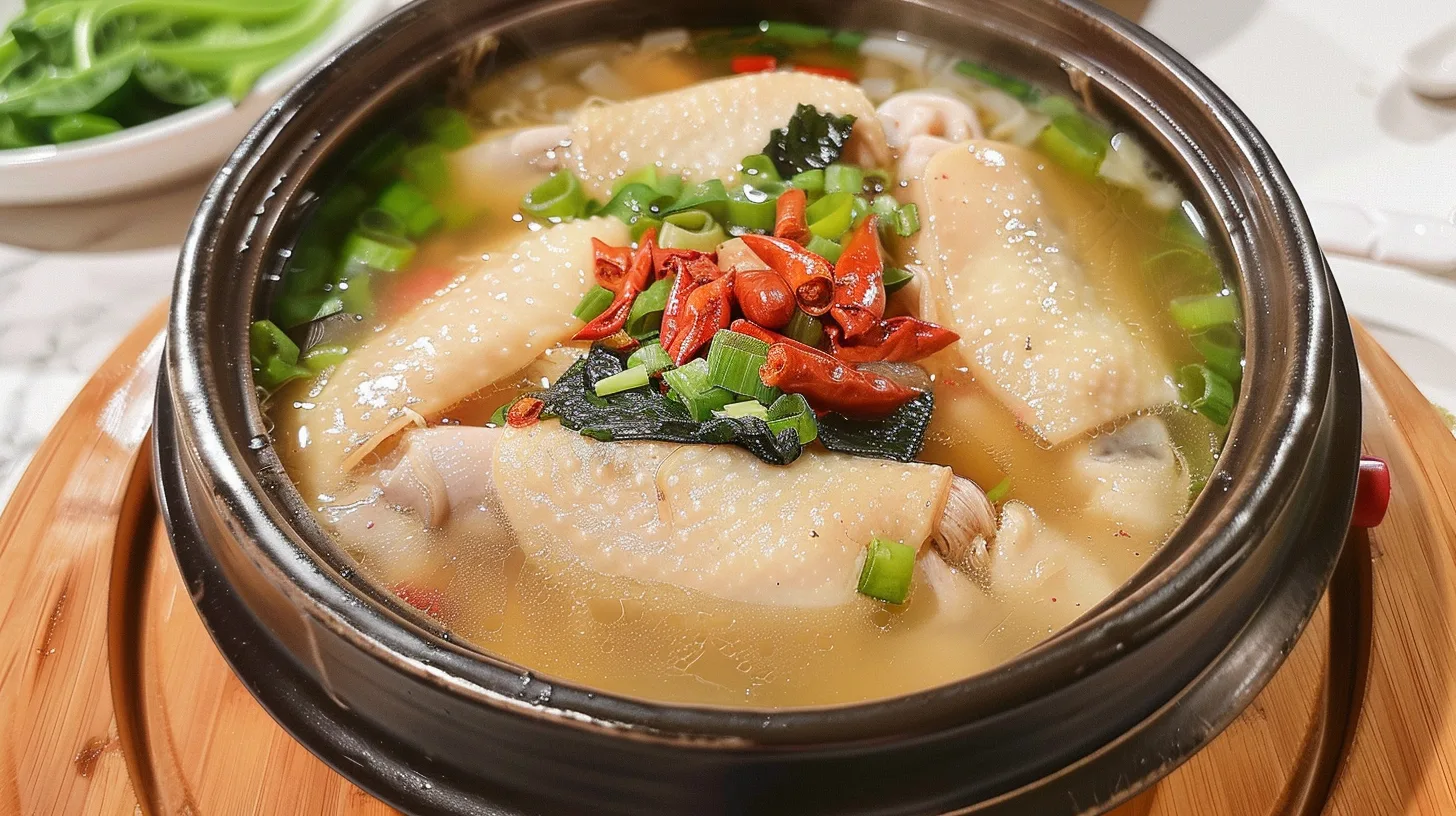
The first time I smelled samgyetang simmering away, that warm, aromatic broth filled with tender chicken and earthy ginseng, I knew I had to learn this Korean comfort food classic.
My initial attempt was laughably bad – I overstuffed the chicken with rice until it burst like a sad balloon, and somehow managed to make the ginseng taste bitter. The whole thing looked more like chicken soup gone wrong than the golden, nourishing bowl I’d dreamed of making.

Now samgyetang represents perfect comfort to me – that cozy, soul-warming dish that makes any day feel special and nostalgic.
Ingredients for Korean Ginseng Chicken Soup
- Small whole chickens: These young chickens become incredibly tender and are traditional for authentic samgyetang – look for them at Korean markets.
- Glutinous rice: The sticky rice stuffing absorbs all those wonderful flavors and creates the signature hearty texture that makes this soup so satisfying.
- Fresh ginseng root: This is the star ingredient that gives samgyetang its distinctive earthy flavor and medicinal properties – don’t skip it for authenticity.
- Garlic cloves: Whole garlic becomes sweet and mellow during the long simmer, adding depth without overwhelming the delicate ginseng notes.
- Jujube dates: These Korean dates add subtle sweetness and are believed to enhance the soup’s nourishing properties – find them dried at Asian markets.
- Fresh ginger: Just a touch of ginger balances the earthiness and adds warming properties that complement the ginseng beautifully in this comforting bowl.
- Green onions: Both cooked in the broth and fresh as garnish, they provide a gentle onion flavor that doesn’t compete with other ingredients.
- White pepper: More delicate than black pepper, it adds warmth without overpowering the subtle, complex flavors of this traditional Korean soup.
- Sesame oil: A few drops at the end adds that nutty Korean flavor and aromatic finish that makes each spoonful absolutely perfect.
- Sea salt: Coarse salt on the side lets everyone season their bowl to taste – it’s the traditional way to serve samgyetang.
How to Make Korean Ginseng Chicken Soup
- Prep Chickens:
- Clean chickens inside and out, removing any excess fat. Pat completely dry with paper towels – this helps the skin stay intact during cooking.
- Stuff Birds:
- Divide soaked rice among chickens, adding 2 garlic cloves and 1 jujube to each cavity. Don’t overstuff or they’ll burst during cooking.
- Seal Cavities:
- Use toothpicks to close the cavity openings securely. This keeps the rice inside and prevents the stuffing from making the broth cloudy.
- Start Broth:
- Place stuffed chickens in large pot with water, ginseng, ginger, and green onions. Bring to boil, then reduce heat to gentle simmer.
- Skim Foam:
- Remove foam and impurities that rise to surface during first 15 minutes. This creates the clear, golden broth that makes samgyetang so beautiful.
- Simmer Low:
- Cover and simmer gently for 75-90 minutes until chicken is fall-off-bone tender and rice is completely cooked through and fluffy.
- Season Serve:
- Season with salt and white pepper. Serve each chicken in individual bowls with hot broth, garnished with green onions and sesame oil.
There’s something so nostalgic about watching samgyetang bubble away on the stove, filling your kitchen with that warm, medicinal aroma that promises comfort in a bowl. Sure, my kitchen looks like a tornado hit it – rice scattered everywhere from overstuffing attempts, ginseng peels on every surface, and somehow chicken fat on my shirt. But when I finally sit down with that golden, aromatic broth and tender chicken that falls apart at the touch of chopsticks, watching my family’s faces light up with each nourishing spoonful, I remember why this traditional Korean soup has become such a treasured part of our comfort food rotation.
How to Store Korean Ginseng Chicken Soup
Store leftover samgyetang in airtight containers in the refrigerator for up to 3 days. The flavors actually improve overnight as everything melds together beautifully. You can also remove the chicken meat and rice stuffing to store separately from the broth, which helps maintain better texture when reheating.
To reheat, warm gently on the stovetop over low heat, adding a splash of water if the broth has thickened. The rice will absorb more liquid as it sits, so don’t worry if it looks different – just add fresh water to reach your preferred consistency and heat until steaming hot throughout.
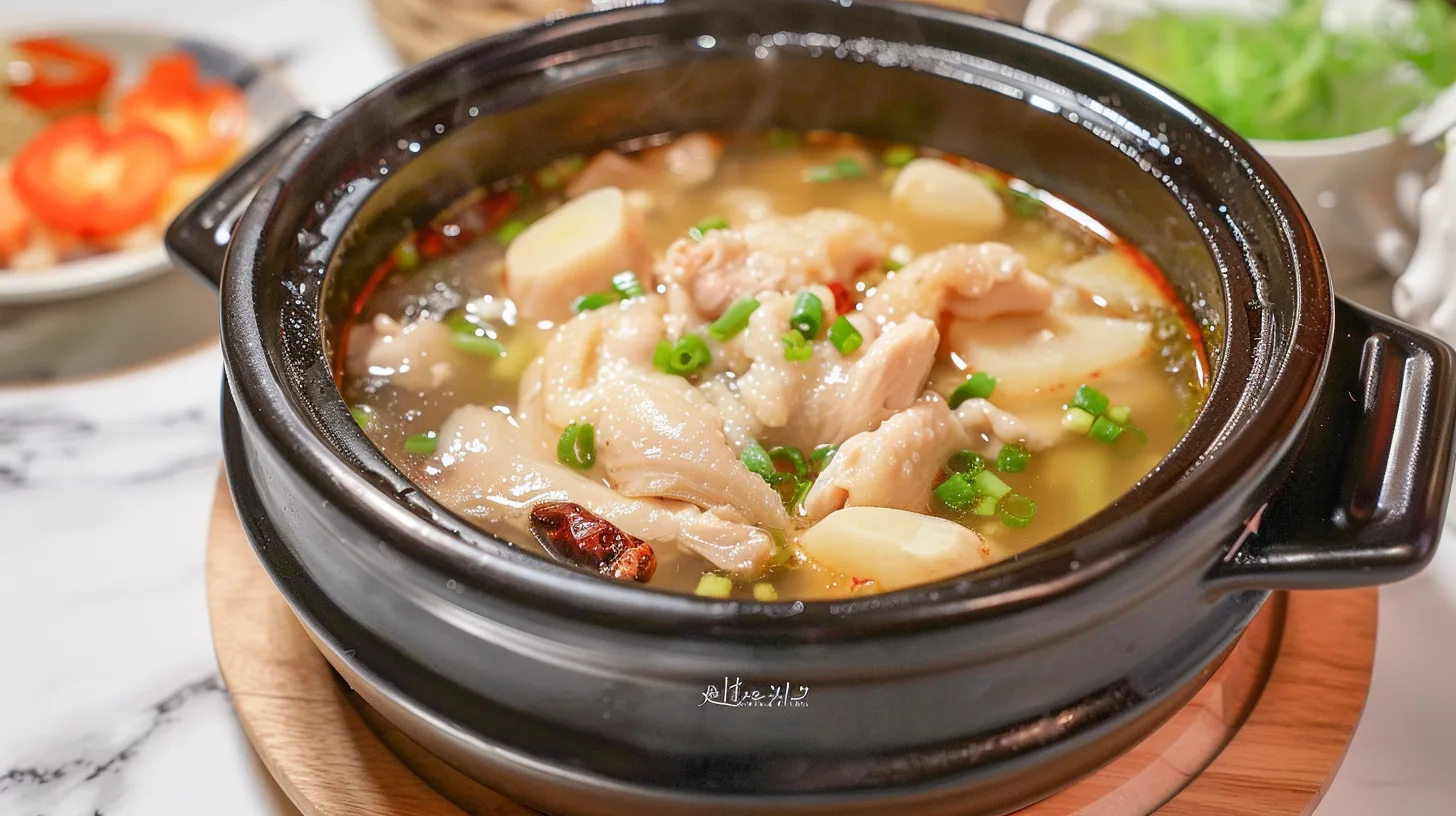
What to Serve with Korean Ginseng Chicken Soup
Samgyetang is traditionally served as a complete meal on its own, but I love pairing it with simple Korean banchan like kimchi, pickled radish, or seasoned bean sprouts. The tangy, spicy sides provide a perfect contrast to the rich, nourishing broth and help cleanse the palate between spoonfuls.
For a more substantial meal, serve alongside steamed rice and roasted seaweed. My personal favorite is enjoying it with a cold glass of barley tea – the combination is absolutely perfect for those cozy autumn evenings when you want something that truly satisfies both body and soul.
Frequently Asked Questions
- → Can I use regular chicken instead of small whole chickens for samgyetang?
You can use chicken pieces, but small whole chickens are traditional and create the authentic presentation and texture that makes samgyetang special.
- → Where can I find fresh ginseng root for this Korean soup recipe?
Look for fresh ginseng at Korean or Asian grocery stores, or order online. Dried ginseng works too but use half the amount.
- → What happens if I can’t find glutinous rice for the stuffing?
Regular short-grain rice works in a pinch, but glutinous rice gives the authentic sticky texture that’s traditional in samgyetang.
- → How do I know when the samgyetang chicken is properly cooked through?
The chicken should fall apart easily when touched with chopsticks, and the rice stuffing should be completely tender and fluffy throughout.
- → Can I make samgyetang in a slow cooker or pressure cooker instead?
Yes, but stovetop gives better control. Slow cooker takes 6-8 hours on low; pressure cooker needs 45 minutes with natural release.
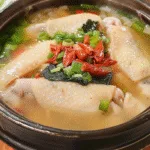
Korean Ginseng Chicken Soup
- Prep Time: 30 Minutes
- Cook Time: 1 Hour 30 Minutes
- Total Time: 2 Hours
- Yield: 4 Servings 1x
- Cuisine: Korean
Description
How to make authentic samgyetang with whole chicken, glutinous rice and Korean ginseng that provides nourishing comfort in every spoonful.
Ingredients
Main Ingredients
- 4 small whole chickens (1–1.5 lbs each), cleaned
- 1 cup glutinous rice, soaked for 2 hours
- 8 cups water
- 4 pieces fresh ginseng root, cleaned
Aromatics & Seasonings
- 8 cloves garlic, peeled
- 4 jujube dates, pitted
- 2 green onions, chopped
- 1 piece ginger (2 inches), sliced
- 2 tsp salt
- 1/2 tsp white pepper
Garnish & Serving
- 2 green onions, finely chopped
- 1 tsp sesame oil
- Coarse sea salt for serving
- Ground black pepper for serving
Instructions
- Prep Chickens: Clean chickens inside and out, removing any excess fat. Pat completely dry with paper towels – this helps the skin stay intact during cooking.
- Stuff Birds: Divide soaked rice among chickens, adding 2 garlic cloves and 1 jujube to each cavity. Don’t overstuff or they’ll burst during cooking.
- Seal Cavities: Use toothpicks to close the cavity openings securely. This keeps the rice inside and prevents the stuffing from making the broth cloudy.
- Start Broth: Place stuffed chickens in large pot with water, ginseng, ginger, and green onions. Bring to boil, then reduce heat to gentle simmer.
- Skim Foam: Remove foam and impurities that rise to surface during first 15 minutes. This creates the clear, golden broth that makes samgyetang so beautiful.
- Simmer Low: Cover and simmer gently for 75-90 minutes until chicken is fall-off-bone tender and rice is completely cooked through and fluffy.
- Season Serve: Season with salt and white pepper. Serve each chicken in individual bowls with hot broth, garnished with green onions and sesame oil.
Notes
- Soak glutinous rice for at least 2 hours before stuffing for even cooking.
- Don’t overstuff chickens or they’ll burst during long simmering process.
- Skim foam regularly in first 15 minutes for clear, golden broth.
- Store leftover soup refrigerated up to 3 days; flavors improve overnight.
- Serve with coarse salt and pepper on side for individual seasoning.
- Fresh ginseng is traditional but dried works using half the amount.
Allergy Information: None
Nutrition
- Calories: 420 calories
- Fat: 18g
- Carbohydrates: 28g
- Protein: 38g